Monday, January 16, 2012

The Hotel Kakslauttanen in Finland

The Hotel Kakslauttanen in Finland is in fact an Igloo Village, at which you can have your pick of 20 unique glass and snow igloos for your stay. They aren’t ice houses, but 31 well-maintained log cabins – built from a very special thermo glass that keeps them warmth and comfortable. Because of that, the temperature inside the Igloos is always a normal room temperature and the igloos inhabitants won’t feel any of the polar cold.
ice bar
The Igloo Village Kakslauttanen boasts a World’s Largest Snow Restaurant. You can enjoy a drink at the Ice Bar, or visit the Ice Gallery for local art, or try the world’s largest smoke sauna if you get a chance, or throw the most memorable wedding or christening at the Ice Chapel.
igloosigloo finland
The surrounding Finnish Lapland scenery is incredible – it’s a prime spot for marveling at the northern lights throughout the winter. When sleeping in the glass igloos you are able to for viewing the amazing natural phenomena – Aurora Borealis and the millions of stars in the sky. The experience is also unforgettable when there is a snowstorm…
hotel igloo kakslauttanen

New 7 star hotel in Dubai


apeiron-island-hotel
Apeiron Hotel is a design concept for a new 7 star hotel in Dubai. Developer and construction schedule have not been announced as of October 2007. The Apeiron Hotel would be the second 7 star hotel to be built in Dubai (The Burj Al Arab hotel was the first 7 star hotel). Designed by UK’s Sybarite Architects, the hi-tech futuristic hotel would feature a two-storeyed jungle at the top of the 28-storeyed building. The seven star hotel is an US $350 million project that would be 300m from the coast of Dubai. Access to the hotel is restricted to water and air only.
apeiron 2
HOTEL STATISTICS: total floors: 28 (above ground), total suites: 438, suite sizes: 180m² – 750m², building height: 185m, gross floor area: 300,000m², site footprint area:26,500m², passenger lifts: 14, service lifts: 8, distance off shore: 300m (Building design is equally as powerful within a landlocked site), wind load factor: 350km per hour, structure: steel, reinforced concrete.
apeiron
The hotel also contains private cinemas, luxury boutiques, conference rooms and restaurants. Other features will include an art gallery, shops, underwater spa & gym, an underwater restaurant. The hotel’s internal facade has louvers to prevent direct sunlight and will made up of solar cells as is the ribbon that frames the building that can generate some energy for the entire hotel. The 28-storey hotel environs will have an artificial crescent-shaped beach, private lagoons and a central lagoon with colourful coral reefs surrounding it.
apeiron-island-hotel-2

Full Moon Hotel Dubai

Full Moon Hotel


Despite the various differences between Baku and Dubai, it seems that the urge to translate oil wealth into extravagant hotel design projects is just too strong to resist. Thus, plans for the Full Moon Hotel in Baku, a 35 floor, 521 foot high behemoth planned for the Caspian waterfront.

Dubai Opera House Building

Dubai Opera House Building - News

Reports in the Press that this project is on hold, as are many in UAE.
Developer Sama Dubai recently merged with Dubai Properties and received a £6.9 billion government bailout

Information Courtesy of Zaha Hadid Architects

Dubai Opera House Dubai Opera House image Dubai Opera House model

Dubai Opera House - Introduction

Design: Zaha Hadid Architects

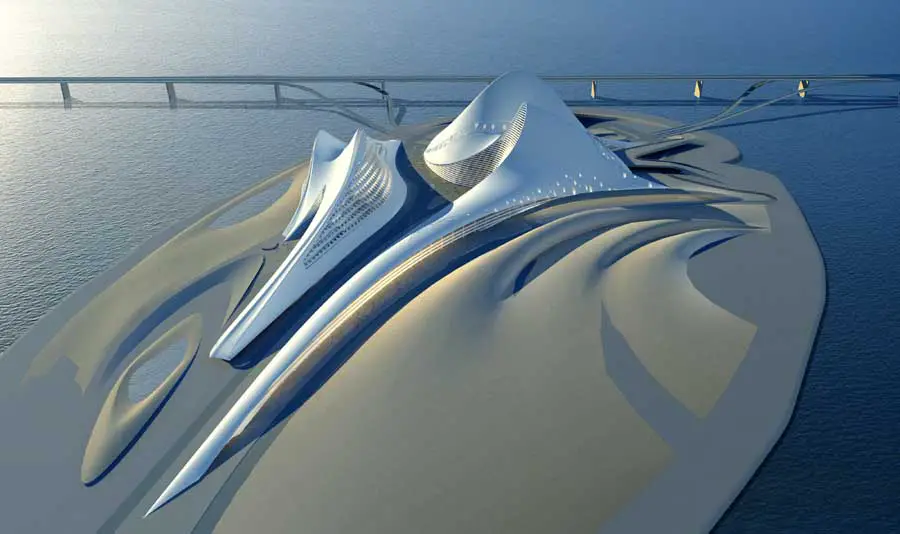
The Dubai Opera House design calls for an exciting new cultural centre in the new Seven Pearls district of Dubai. This landmark development will accommodate an opera house, playhouse, arts gallery, performing arts school and themed hotel on an island in Dubai Creek just off the mainland part of the district. All of these facilities will be state of the art to host world class performances and exhibitions. The Dubai Opera House will have a seating capacity of 2,500 while the playhouse will have a seating capacity of 800. The arts gallery with 5000m2 of exhibition space is indeed a full size exhibition facility comparable to the Guggenheim Museum in New York. The hotel will accommodate guests in a 6 star setting. Sited on an island in Dubai Creek, the development will be connected to Greater Dubai by a road connection to the mainland.

Design Concept and Programme Organisation
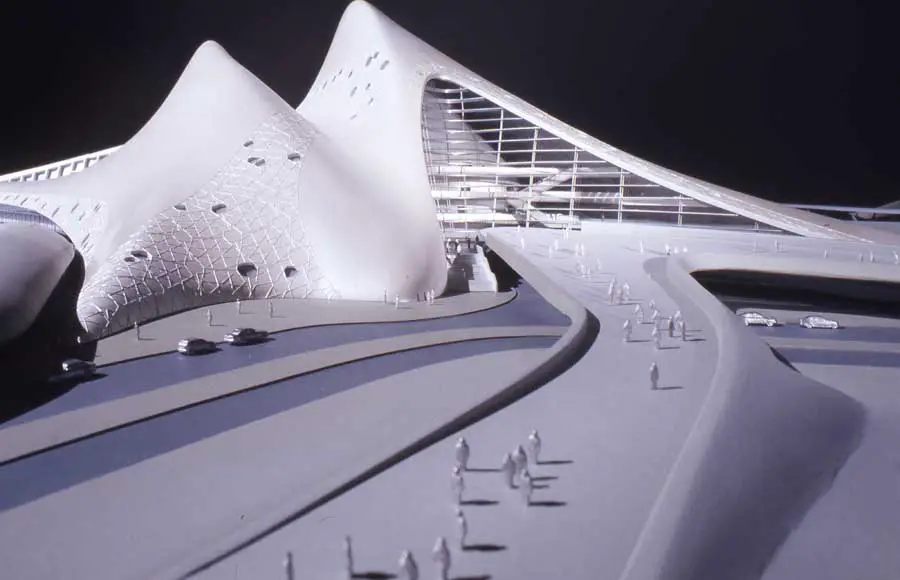
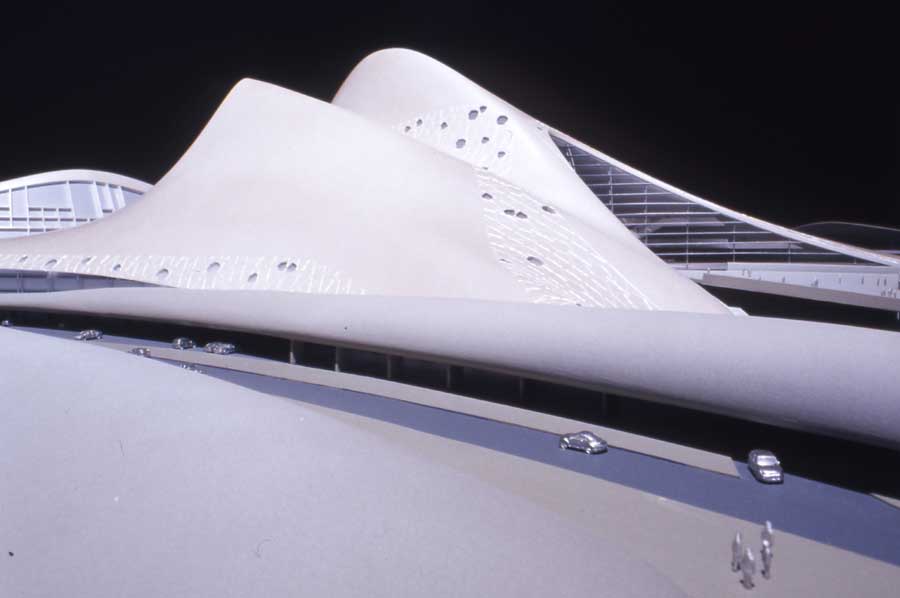
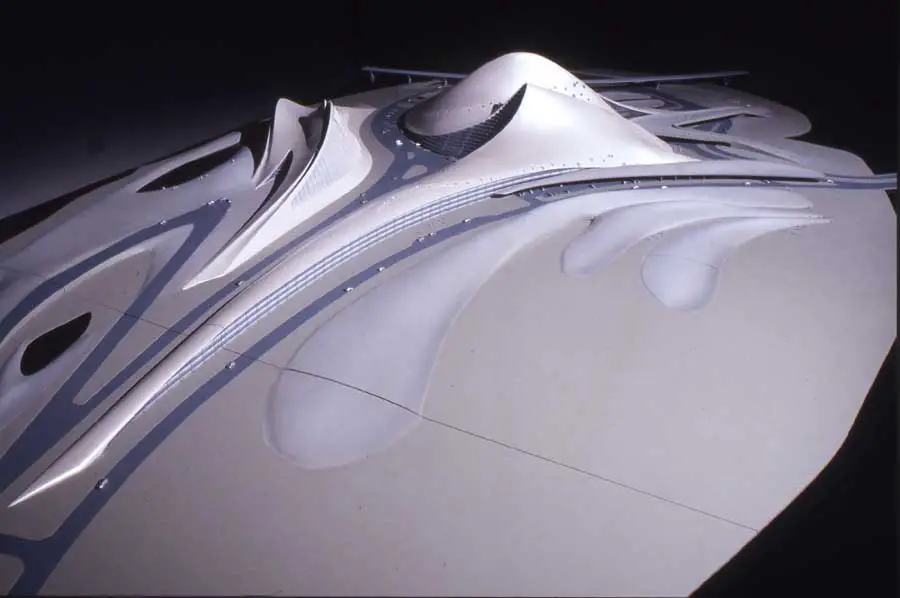
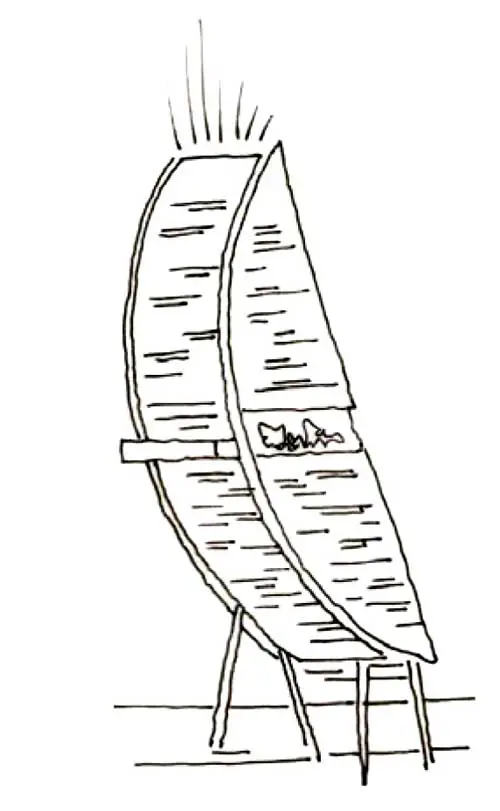
The Dubai Opera House proposal houses all of the facilities within a single striking structure. The gentle winding form evokes images of mountains or sand dunes. Rising out of the ground, this form is both a part of the landscape yet very much a distinct element in the skyline. The surrounding landscape forms build up to the main building. These constitute open park spaces as well as ancillary functions such as the parking facilities and the monorail station, which are either tucked under or integrated into the landscape forms.

Opera House Dubai Opera House UAE Opera House

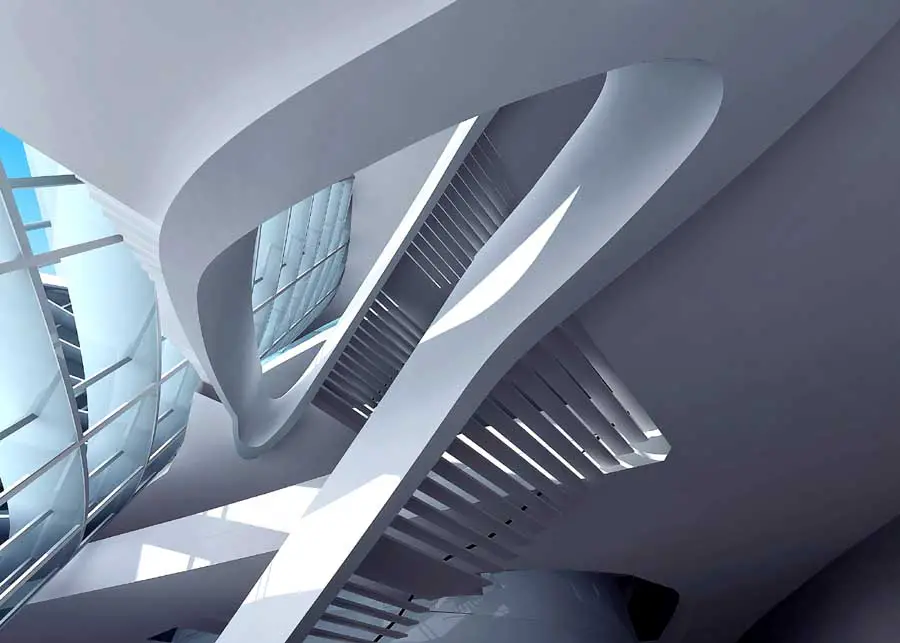
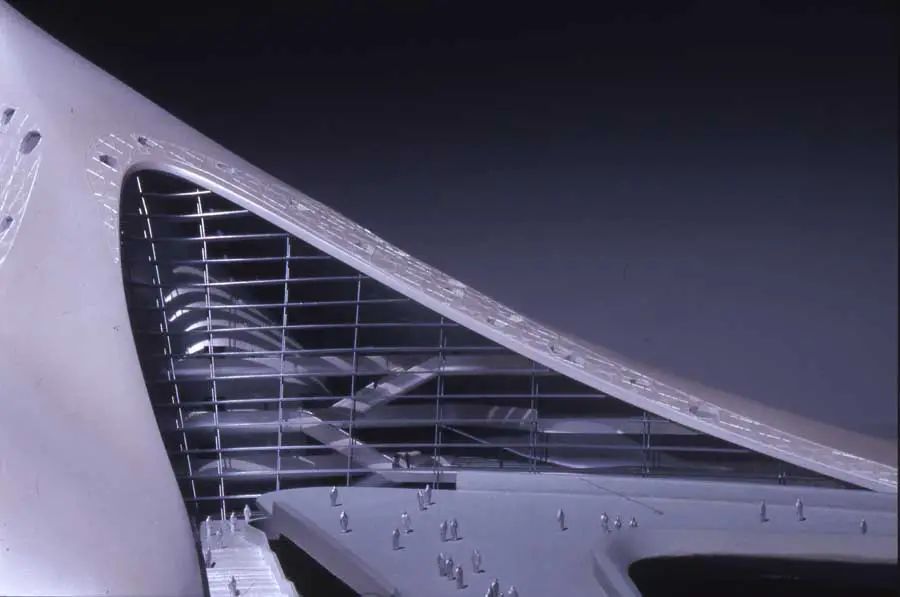
The two peaks correspond to the opera house and the playhouse. The tall requirements of the fly towers are nested under these peaks. From these peaks, the Dubai Opera House form gradually swoops down to touch the earth. The form is scalloped away where the three major entrances are to be found. The main entrances for audiences visiting either of the two performing arts auditoria are on the north side of the building. At the ground level will be the VIP entrance with car drop off right at the entrance and a separate foyer from the main foyer. This foyer serves both the opera house and the playhouse. The main foyer is a gentle multi-tiered landscape at one floor above the ground floor. It also serves the opera house and the playhouse as well as having an interior connection to the arts gallery. Floating above this foyer are further foyer spaces serving the balcony levels. The foyer levels from the main foyer level up are visually connected to each other through a series of voids. This allows for direct views between the main foyer at the first floor all the way up to the highest balcony foyer. Surprising views are abundant in this space.

The Dubai Opera House auditoria are contained in flowing shapes that seem to emerge from the underside of the main shell. This inner shell however, does not quite touch the main shell. Instead, the two surfaces disappear into a light gap between them. Supporting functions found off the foyer are defined by walls that merge into the underside of the main shell.

Dubai Opera Houe & Cultural Centre, Dubai, UAE - Building Information

Date: 2006-tbc
Program: Design for a Cultural Centre and Opera House in Dubai
Architect: Design Zaha Hadid with Patrik Schumacher
Project Director: Graham Modlen
Project Leader: Dillon Lin

Design Team: Christine Chow, Lourdes Sanchez, Yiching Liu, Swati Sharma,
Tyen Masten, Simone Fuchs, Johannes Schafelner
Competition Team: Christine Chow, Lourdes Sanchez, Yiching Liu, Larissa Henke, Claudia Wulf, Hooman Talebi, Daniel Dendra, Simon Yu, Komal Talreja
Engineering Consultant: Arup [London, UK]
Acoustics Consultant: Richard Cowell, Ian Knowles
Structural Engineering: Keith Jones
Building Services Engineers: Tim Thornton
Façade Engineering: Steve Bos

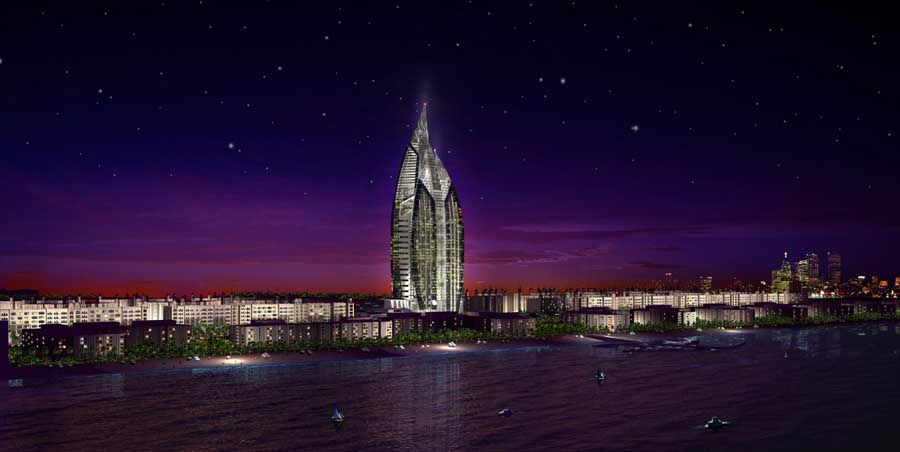
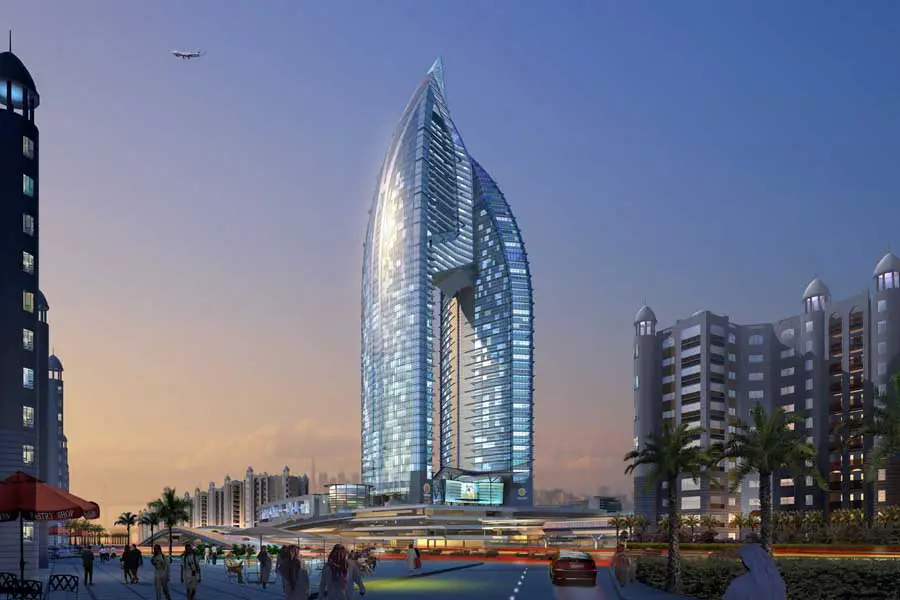
Trump International Hotel & Tower Dubai

Trump International Hotel & Tower Dubai

The Palm Jumeirah
2006-
Design: Atkins

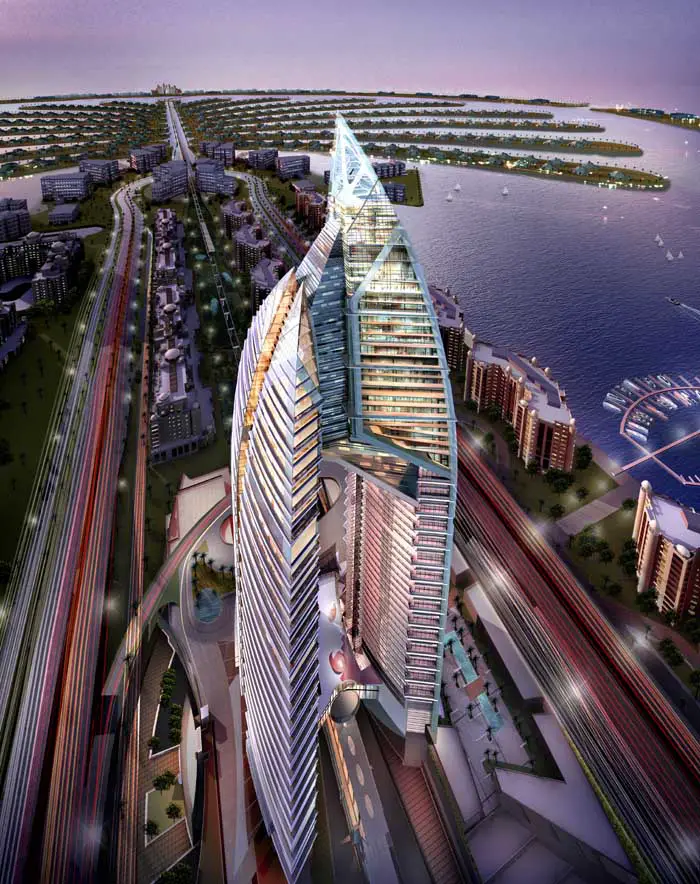
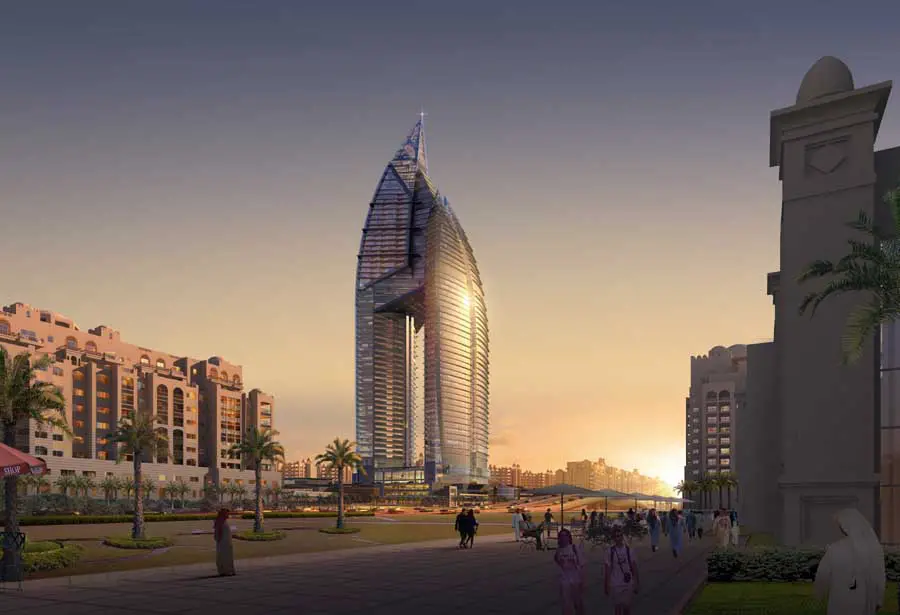
Trump International Hotel & Tower Dubai Trump International Hotel Dubai Trump Hotel Dubai Trump International Hotel & Tower
Dubai tower images © from Atkins

Trump International Hotel & Tower Dubai - Building Information

Property developer: Nakheel
Location: man-made island off UAE
for Nakheel Hotels & resorts / Trump Organisation joint venture
approx. 255m high, 60 storeys
5 star hotel + apartments

Trump International Hotel & Tower
Dubai, UAE

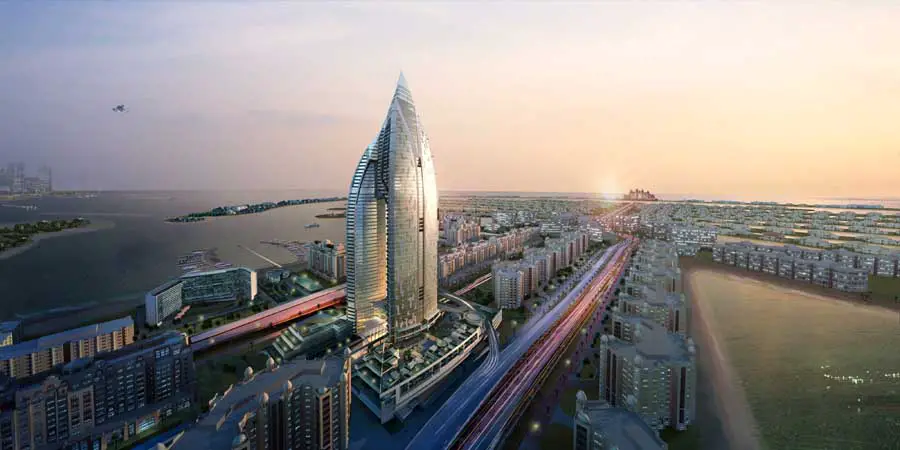
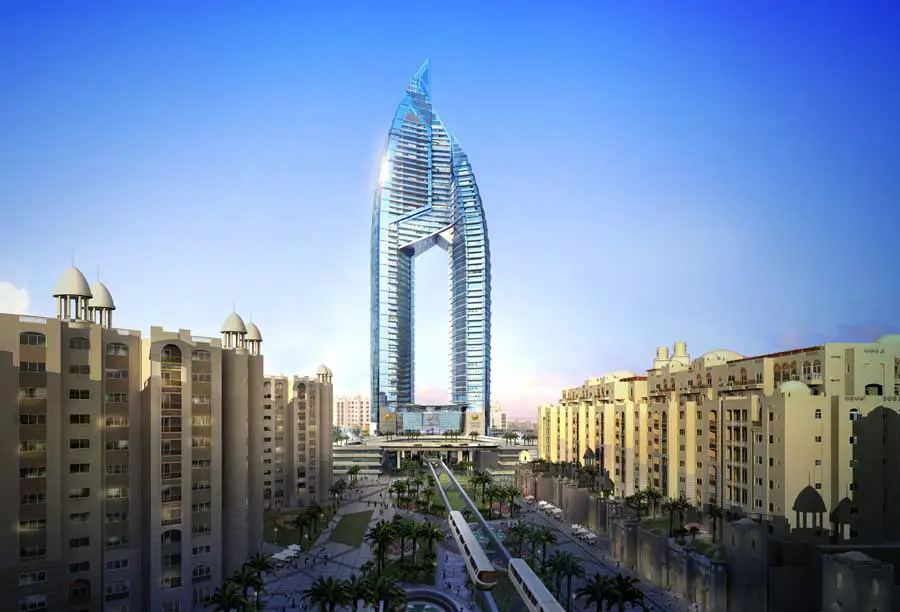
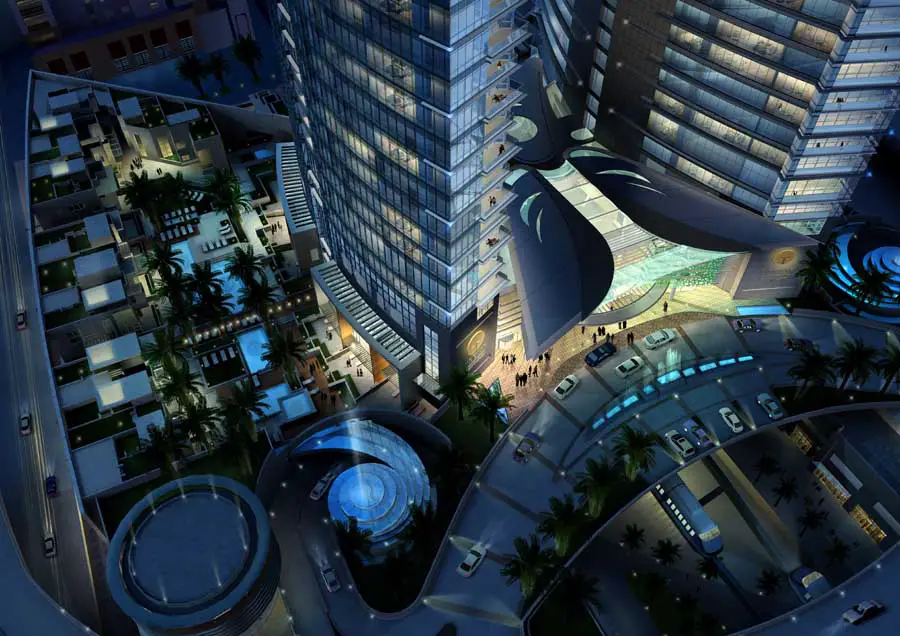
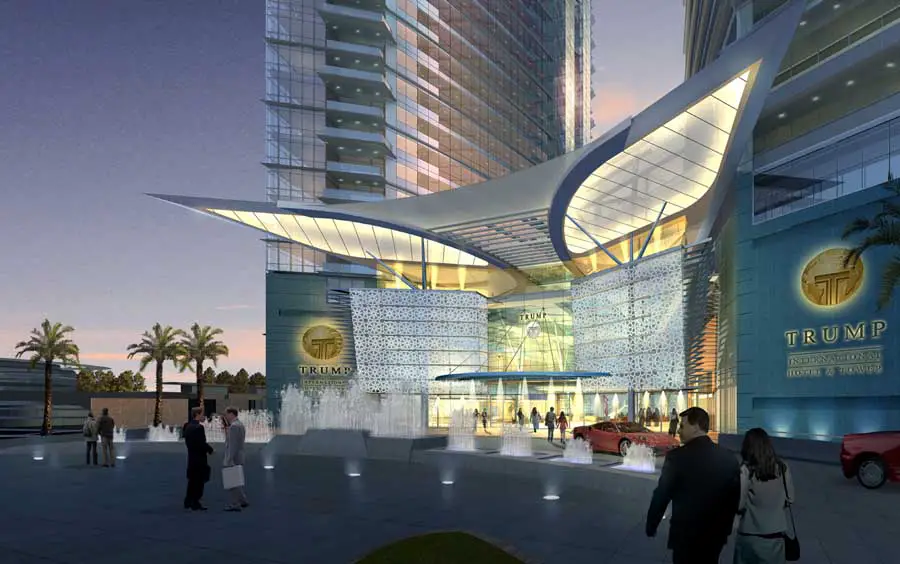
Having been called upon by the Client to carry out a review of the original design of Trump International Hotel and Tower, Palm Jumeirah, Atkins moved towards creating a brand new architectural concept which was subsequently approved by Nakheel Hotel and Resorts and the Trump Organisation.

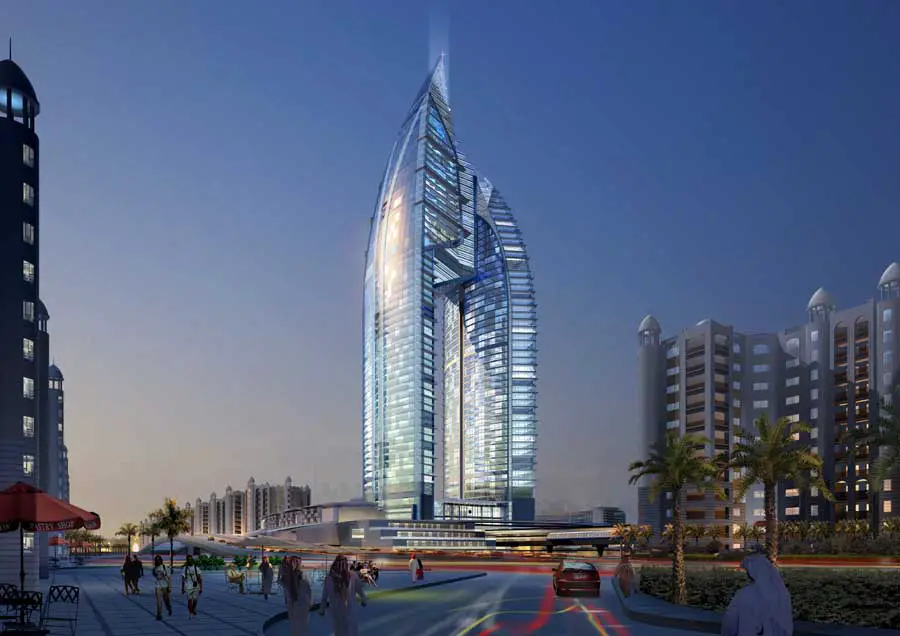
Trump International Hotel & Tower UAE Trump Hotel & Tower Dubai Trump Tower Dubai Trump International Hotel & Tower Dubai
Dubai tower images © from Atkins

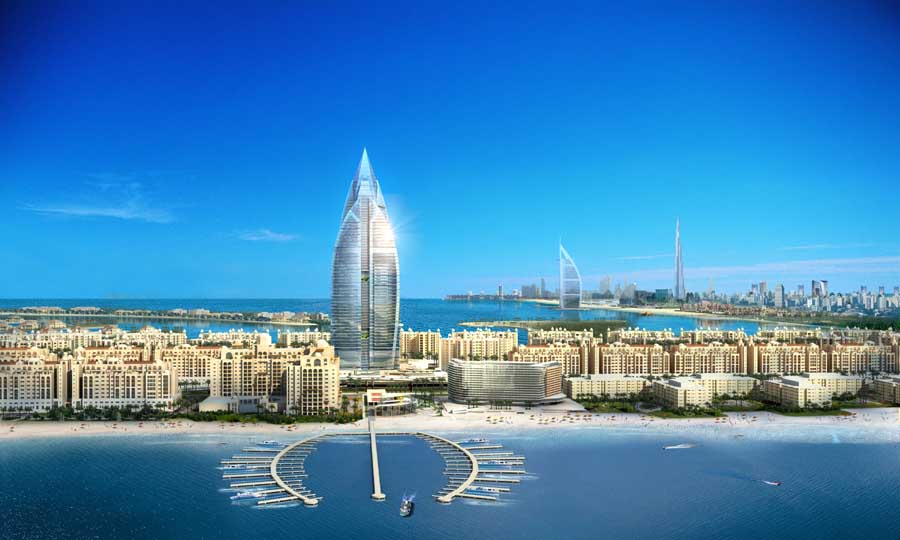
Atkins is now appointed to provide full design consultancy services for this hotel, which is located on Nakheel’s Palm Jumeirah, a manmade Island off the west coast of Dubai. The tower will stand as a powerful landmark on what will be the most prestigious project in the world. The building is striking in design and will incorporate world-class residential, hotel and office facilities.

Background on the Trump Hotel Tower Dubai architects:
Atkins plans, designs and enables the delivery of complex capital programmes for clients in the public and private sectors across the globe. Atkins is the largest multidisciplinary consultancy in Europe; the largest engineering consultancy in the UK; and the world's third largest design firm.

Trump Hotel Dubai Tower Trump Hotel Dubai Trump Tower Dubai Trump International Hotel & Tower
Dubai tower images © from Atkins

Trump Hotel Dubai - Tower Building images / information from Atkins, Architects

Atkins celebrates Iris Bay topping out

Iris Bay

Atkins celebrates Iris Bay topping out

Atkins officially celebrated one of the construction industry's oldest customs, the structural 'topping out' of the 32-storey Iris Bay office and retail tower at Business Bay in Dubai.

Iris Bay Tower

Sheth Tower, Iris Bay, Dubai
2006-
Architects: Atkins

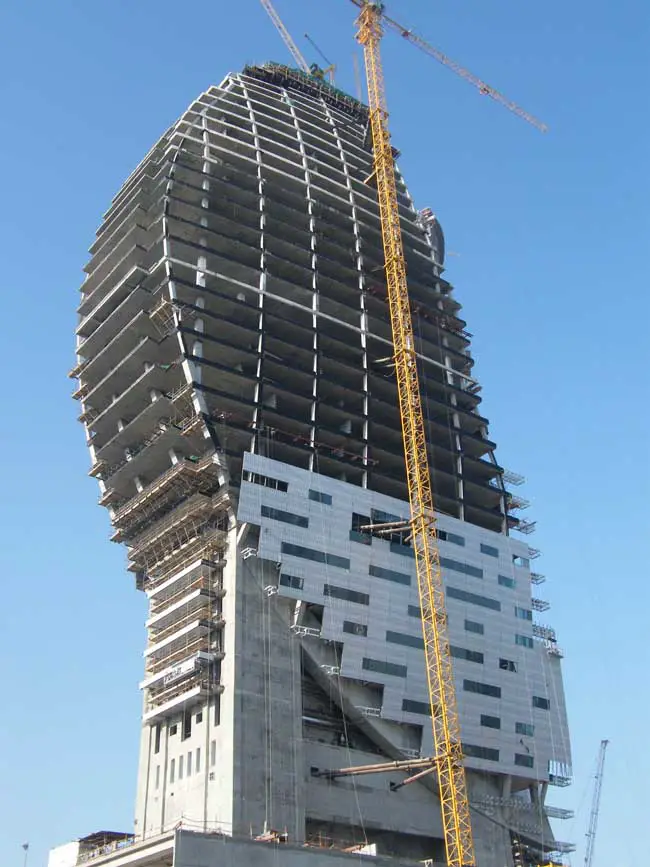
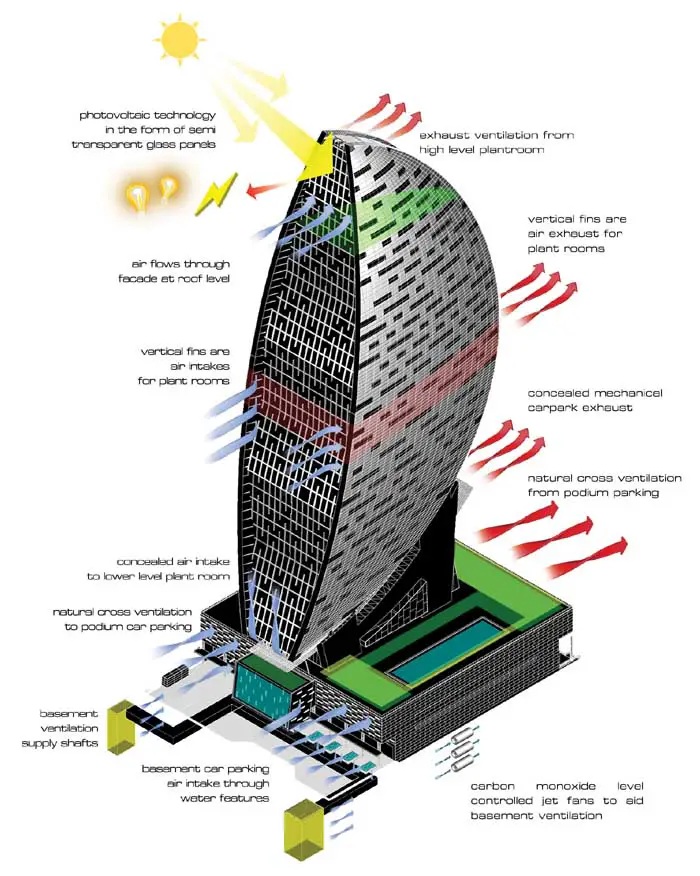
Aside from the distinctive architectural design of this unusually shaped commercial building, Iris Bay was an early opportunity for Atkins to explore the challenges of sustainable design in a hot climate and incorporates both passive and active environmental features. The firm was commissioned as lead consultants for architecture, structural, mechanical and electrical engineering design, and project management for the entire development.

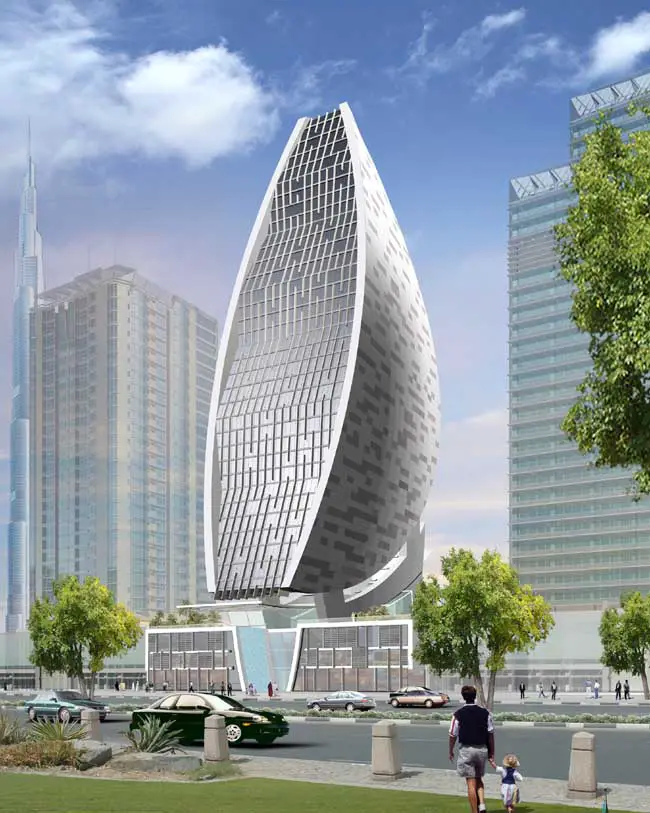
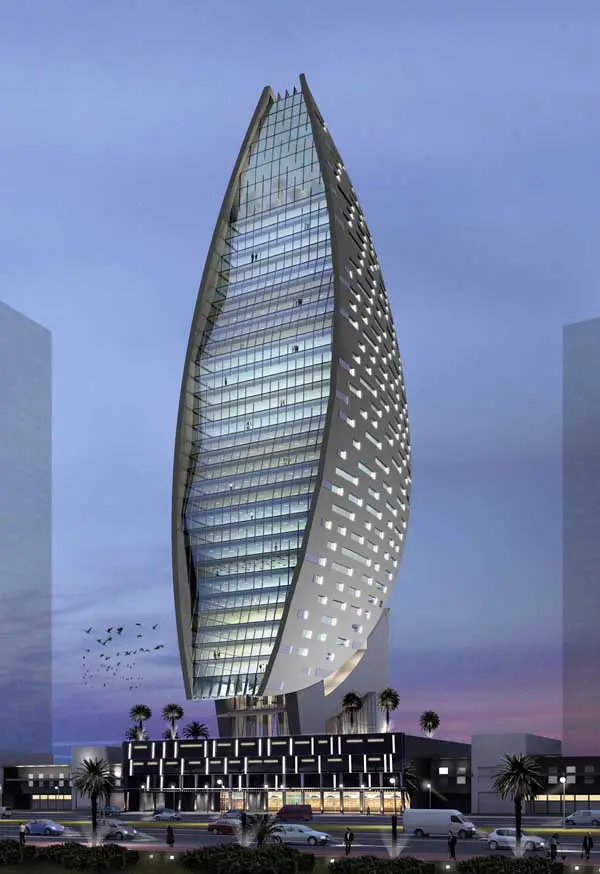
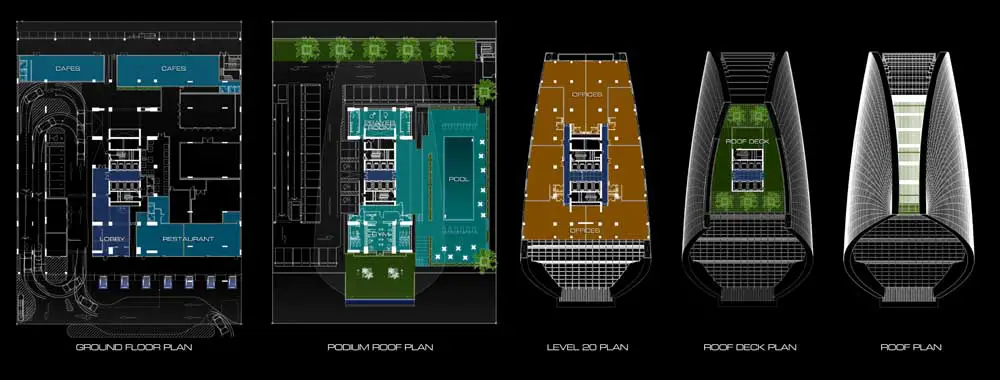
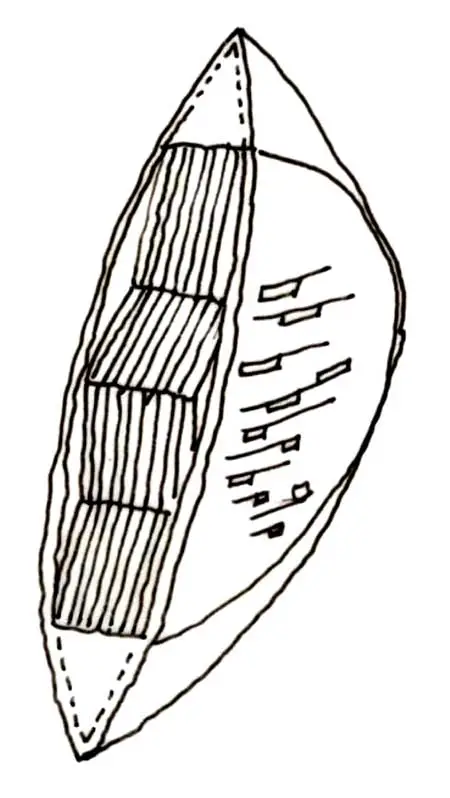
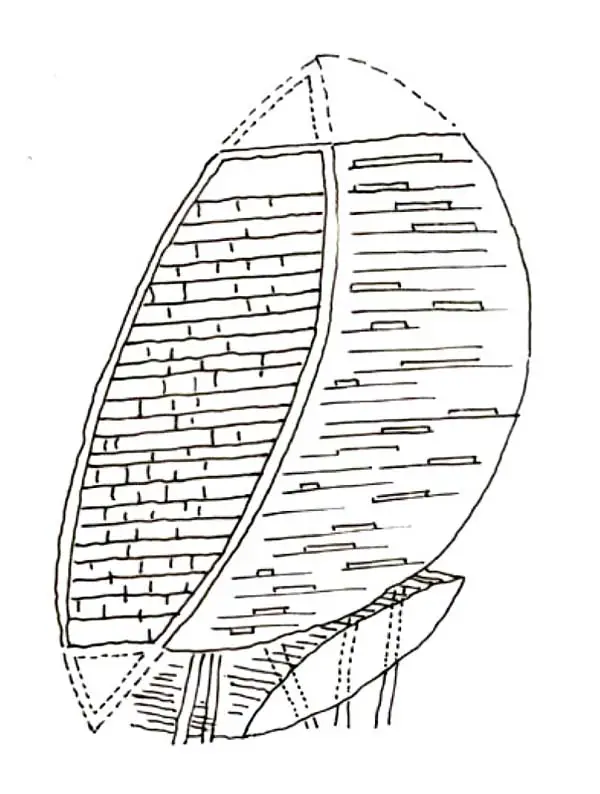
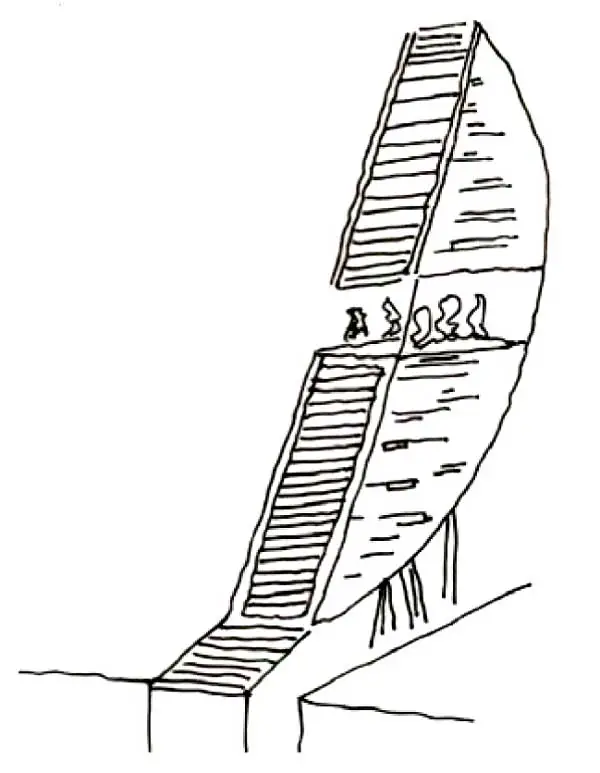
The tower comprises two identical double curved pixelated shells which are rotated and cantilevered over a four-storey podium, underneath which are three levels of basement designed to facilitate underground parking for 920 cars. The distinctive ovoid shape creates areas of negative pressure that draws air through the building and reduces the dependence upon mechanical ventilation for the underground car park in particular.

The rear elevation is a continuous vertical curve punctuated by balconies while the front elevation is made up of seven zones of rotated glass. This includes naturally ventilated spaces and integrated solar energy and shading films in the glass façade.

Last week, the site supervision team was joined by the client and key members of the design team in hosting a small function to celebrate the major milestone which culminated in the last structural slabs being poured atop the 170m tall structure.

"We are delighted that this project has quietly but successfully advanced to this milestone stage," says Hesham Abdelaziz Gabr, Atkins Resident Engineer for the Iris Bay project. "It was a real challenge for all of us to meet the demands of the unique design, but working alongside the contractor to resolve on-site issues with the full coordination and support from the design teams here in Dubai, we have kept the project fully on track" he added.

Iris Bay tower images / information from from Atkins

Previously:

Iris Bay tower Iris Bay tower
Iris Bay tower - images © from Atkins

Sheth Tower Dubai - Building information from Atkins

Atkins unveils designs for Iris Bay Tower, Dubai

Atkins has unveiled design images for Iris Bay - a 170m high, 32-storey tower in the heart of Dubai's commercial core, Business Bay.

The tower is elevated above a four-story perforated podium which floats over a double height arcade, and houses retail and commercial space totalling 82,000 sq m. The scheme is set to have a major presence along Dubai's Sheikh Zayed Road, which forms the city's main artery.

Iris Bay tower Iris Bay tower
Iris Bay tower - images © from Atkins

Featuring a revolutionary ovoid design, the tower comprises two identical double-curved shells, rotated and cantilevered over the podium. The interface between the tower and the podium features prayer rooms, a gym and an outdoor pool.

The futuristic development is intended to provide prestige office space to some of the world's leading companies, and will sit in a business region akin to New York's Manhattan or London's Square Mile.

Atkins is developing Iris Bay on behalf of owner/developer Sheth Estates International Ltd.

Sheth Tower Dubai Sheth Tower Sheth Tower Dubai Sheth Tower Dubai
Iris Bay images © from Atkins

Atkins' Dubai office is the company's largest in the Middle East. Atkins is growing rapidly in the region, with staff numbers now at 1,500, compared to 1,000 six months ago.

Iris Bay Dubai - Sheth Tower images / information from Atkins, Architects

Burj Dubai

Burj Dubai

The Burj Dubai surpasses Taipei as tallest building in the world
Adrian Smith + Skidmore, Owings & Merrill

Burj Khalifa skyscraper

Burj Dubai Skyscraper - World's Tallest Building : Burj Khalifa status ratified - Mar 2010

Press Release : Burj Dubai reaches a record high

Burj Dubai

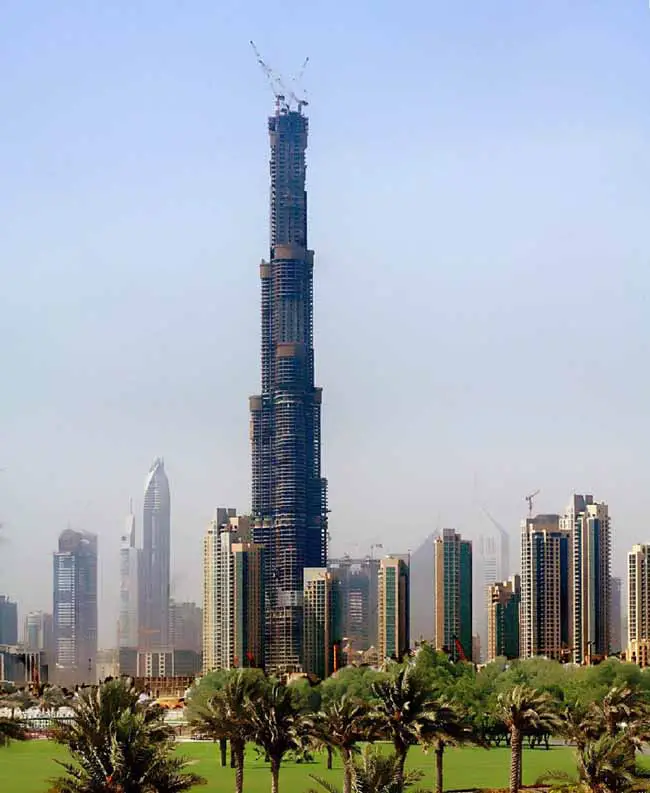
512.1m (1,680 ft) - 141 storeys, Burj Dubai is tallest building in the world
A human achievement without equal, says Emaar Chairman Alabbar

Dubai, UAE; July 21, 2007: Today the world has a new global landmark - Burj Dubai. At 512.1 metres (1,680 ft), Burj Dubai, developed by Emaar Properties, is the tallest building in the world. The achievement once again puts Dubai in the international spotlight and underlines Emaar’s arrival as a global developer.

Now a Financial Times Global 500 (FT Global 500) company, Emaar has a significant presence in 30 international markets.

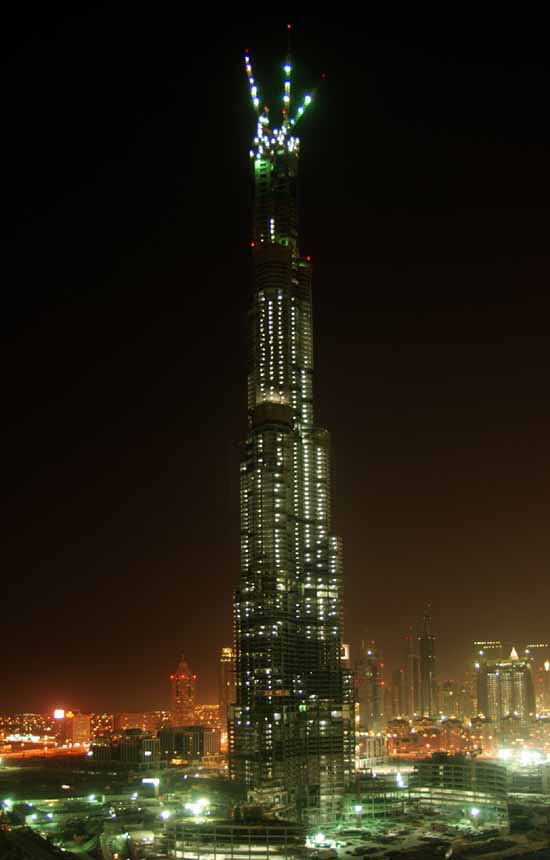
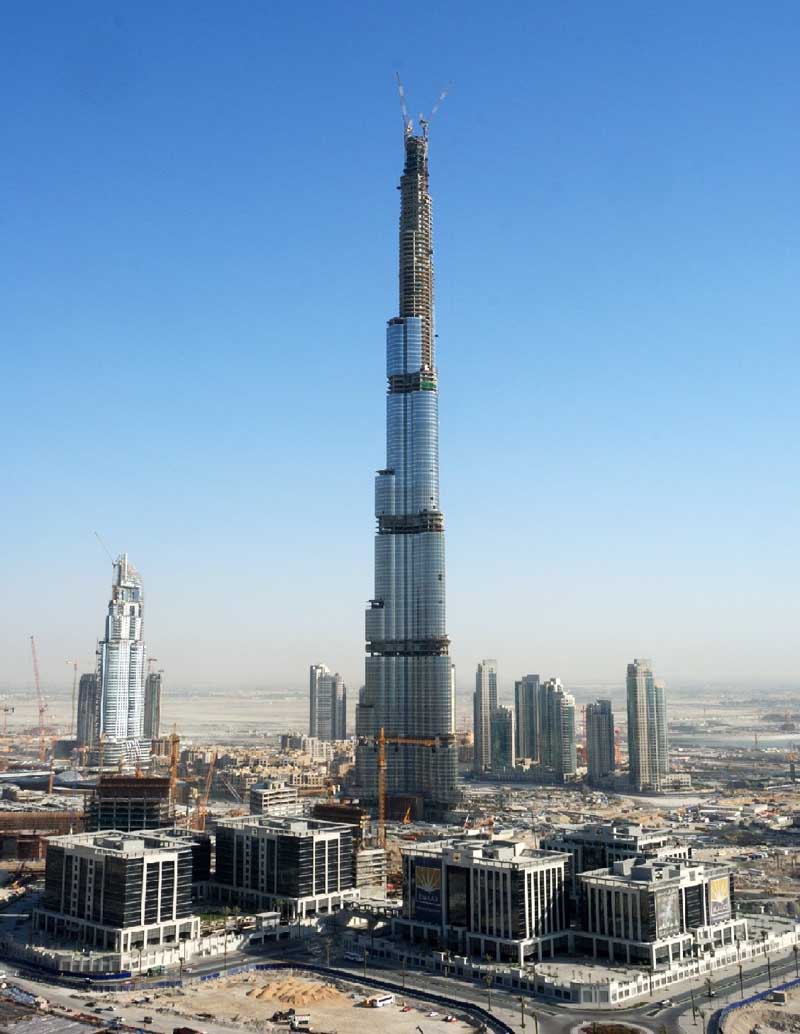
Burj Dubai is now taller than Taipei 101 in Taiwan, which at 508 metres* (1,667 ft) has held the tallest-building-in-the-world title since it opened in 2004. Burj Dubai has now reached 141 storeys - more storeys than any other building in the world.

On schedule for completion in 2008, Burj Dubai will be the tallest structure in the world in all four of the criteria listed by the Council on Tall Buildings and Urban Habitat (CTBUH). The council measures height to the structural top, the highest occupied floor, to the top of the roof, and to the tip of the spire, pinnacle, antenna, mast or flag pole.

During its construction, Burj Dubai has left behind the skyscrapers that previously defined tall tower architecture around the world, such as Petronas Towers in Malaysia (452 metres, 1,483 ft); Sears Tower, Chicago (442 metres, 1,451 ft); Jin Mao Building, Shanghai (421 metres, 1,381 ft) and Empire State Building, New York (381 metres, 1,250 ft).

The Burj Dubai story is only beginning. The final height and number of storeys, a topic of enthusiastic debate among media and experts alike, has not yet been revealed. But from now on, the tower will set new records for its technical and architectural ingenuity.

When completed, Burj Dubai will have consumed 330,000 cubic meters of concrete, 39,000 metric tons of steel rebar and 142,000 sq m of glass – and 22 million man hours. The tower will have 56 elevators travelling at 1.75 to 10 metres/sec and double-decker observatory elevators that can carry 42 people at a time.

More than 313,700 cubic metres of reinforced concrete and 62,200 tonnes of reinforcing steel have been used in the tower’s construction so far. Burj Dubai has already set a new world record for vertical concrete pumping for a building by pumping to over 460 metres (1,509 ft). The previous record of 448 metres (1,470 ft) was held by Taipei 101.

Reflecting a no-compromise approach to safety, Burj Dubai has been designed to manage the effect of wind and seismic movements. High-strength concrete makes up the tower’s super-structure, which is supported by large reinforced concrete mats and piles. The 80,000 sq ft foundation slab and 50-metre deep piling are waterproofed and feature cathodic protection.

Burj Dubai became the tallest building in the world in just 1,276 days; excavation work started in January, 2004. More than 5,000 consultants and skilled construction workers are employed on site, and the world’s fastest high-capacity construction hoists, with a speed of up to 2 m/sec (120 metres/min), move men and materials.

Structural steel work for the tower will begin soon, and cladding work using a high-performance system has already started.

The primary cladding materials of reflective glazing, aluminium and textured stainless steel spandrel panels and vertical stainless tubular fins accentuate the tower’s height and slenderness to the eye.

“Four years ago Burj Dubai was conceived by Emaar Properties as a 90-storey structure. It was the UAE Vice President and Prime Minister and Ruler of Dubai, His Highness Sheikh Mohammed Bin Rashid Al Maktoum, who inspired us to ‘resist the usual’ and build a global icon,” said Mr Mohamed Ali Alabbar, Chairman, Emaar Properties.

He said: “Burj Dubai is not just an architectural and engineering masterpiece in concrete, steel and glass. It is a human achievement without equal. Burj Dubai will inspire future generations to think beyond the ordinary and to challenge their mind and spirit.”

Emaar Properties has partnered with best-in-class consultants such as South Korean construction major Samsung Corporation and New York-based Project Manager Turner Construction to realise the design of internationally admired architect Adrian Smith and Skidmore, Owings & Merrill of Chicago.

Burj Dubai will be at the centre of Downtown Burj Dubai, a US$20 billion, 500-acre downtown development billed as the most prestigious square kilometre on earth.

Burj Dubai will feature residential, commercial and retail components including the world’s first Armani Hotel & Residences, exclusive corporate suites, a business centre, four luxurious pools and spas, an observation platform on Level 124 and 150,000 sq ft of fitness facilities.

Burj Dubai images / information from Edelman 210707 for Emaar Properties

*Note: All figures on the height of various towers as listed by the Council on Tall Buildings and Urban Habitat, Chicago

Burj Dubai - Fast Facts : Milestones

Feb 2003: Emaar Properties announces Burj Dubai

Jan 2004: Excavation work for Burj Dubai begins

Jun 2004: Launches Downtown Burj Dubai

Sep 2004: UAE Vice President & Prime Minister and Ruler of Dubai His Highness Sheikh Mohammed Bin Rashid Al Maktoum witnesses the first pouring of cement for Burj Dubai

May 2005: Inks deal with Giorgio Armani to open The Armani Hotel & Residences in Burj Dubai

Jun 2006: Burj Dubai scales 50 levels

Jan 2007: Burj Dubai reaches Level 100

Mar 2007: Burj Dubai, at Level 110, is the tallest structure in the Middle East and Europe

Apr 2007: At Level 120, Burj Dubai sets new global record for having more floors than any building in the world

May 2007: At Level 130, Burj Dubai is second tallest tower in the world

Jul 2007: At Level 141, Burj Dubai is tallest tower in the world

Jan 2010 : Burj Dubai renamed Burj Khalifa + inauguration of the world's tallest building

Burj Dubai - Fast Facts : Highlights

The tip of the spire can be seen by a person 95 km (60 miles) away.

An estimated 330,000 sq m of cement, 39,000 metric tones of steel rebar and 142,000 sq m of glass will be utilized in the construction of Burj Dubai.

22 million man hours will go into building the landmark.

The foundation slab is 80,000 sq ft in size and the piling is 50 metres deep.

Burj Dubai will set a new global record in vertical concrete pumping in any construction activity.

The Burj Dubai’s Observatory Elevators (double deck cabs) will have the world’s longest travel distance from lowest to highest stop.

Burj Dubai will contain the world’s highest elevator installation.

A Condensate Collection System will collect condensed water from the hot and humid air, which will be used for irrigation requirements for the tower’s gardens. This system will provide about 15 million gallons of supplemental water per year, equivalent to nearly 20 Olympic-sized swimming pools.

The curtain wall of the Burj Dubai will be equivalent to 17 football (soccer) fields or 25 American football fields.

The concrete used for the Burj Dubai is equivalent to a sidewalk 1,900 km long (1,200 miles).

Burj Dubai tower : main page with more images

Burj Dubai renamed to Burj Khalifa

Burj Dubai designer : SOM Architects

Burj Dubai Photo Burj Dubai Tower

Burj Dubai Developers - Emaar Properties PJSC:

Emaar Properties PJSC is one of the world’s largest real estate companies and is rapidly evolving to become a global provider of premier lifestyles. Powered by its Vision 2010 to become one of the most valuable companies in the world, Emaar is charting a new course of growth with a two-pronged strategy of geographical expansion and business segmentation.

Emaar has highlighted its remarkable global growth by debuting on the Financial Times Global 500 ranking, which provides an annual snapshot of the world’s largest companies. Emaar has been assigned A- and A3 ratings with stable outlook by Standard & Poor’s and Moody’s Investor Services, respectively.

Replicating its successful business model in Dubai, Emaar is extending its expertise in creating master-planned communities to international markets. Emaar is also developing new competencies in retail, hospitality and leisure, education, healthcare, finance and industry, which have evolved from its integrated approach to customer service and property development.

Listed on the Dubai Financial Market, part of the Dow Jones Arabia Titans Index and certified to ISO9001:2000 for quality standards, Emaar is developing Burj Dubai, the world’s tallest tower , and The Dubai Mall, one of the world’s largest shopping and entertainment destinations. In Saudi Arabia, Emaar is developing the US$26.6 billion King Abdullah Economic City, the region’s largest private sector-led project. Emaar’s portfolio currently covers the following countries: the UAE, Saudi Arabia, Jordan, Syria, Lebanon, Morocco, Egypt, Turkey, Libya, India, Pakistan, Indonesia, the US, the UK, France and Canada.

An award-winning developer, Emaar has strengthened its product sale competencies, market reach and best practices through strategic acquisitions and joint ventures. Emaar acquired John Laing Homes, America’s second largest privately held home builder; Hamptons International, UK’s premier realtor; and formed a joint venture with US-based Turner International to strengthen execution capabilities.

Emaar has joined hands with Giorgio Armani and Accor Hotels to strengthen its presence in hospitality, and will launch ten luxury Armani resorts and hotels world-wide and 100 Formule 1 budget hotels in India. The company is opening educational institutions and healthcare centres in South Asia, Middle East and North Africa and the Subcontinent. Emaar acquired Singapore-based leading education provider, Raffles Campus, to extend expertise to its educational institutions.

Emaar holds 30 per cent equity in Dubai Bank, focused on retail and commercial banking. Emaar is also the largest shareholder in Amlak Finance, UAE's leading Islamic home financing company.

Dubai Palm Island

Dubai Palm

The Dubai Palm has been called the eighth wonder of the world: we outline key property aspects with images + design information about the island below.

Palm Island Dubai
island picture : Palm Jumeirah

UAE Villas

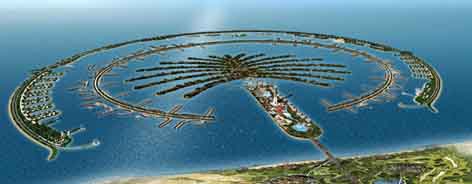
Dubai Palm Island will be built in the shape of 17 huge fronds surrounded by 12 km of protective barrier reefs, extending 5 km into the sea south of Dubai city. The islands will be accessible by 300m bridges from the mainland or boat to two marinas; the main causeway will have a monorail system. This Dubai island project will be built on 80m cubic metres of land dredged from the approach channel to the emirate's Jebel Ali port, an operation that will deepen the channel to 17m.
Dubai Palm Island
island picture : Palm Jebel Ali

Dubai's palm tree-shaped resort island on land reclaimed from the sea will add 120 km of sandy beaches to the UAE and be visible from the moon. Dubai Palm Island will include 2,000 villas, up to 40 luxury hotels all as or more luxurious as any Chicago hotels, shopping complexes, cinemas and the Middle East's first marine park.

Dubai Palm Island

Information re UAE Island from RMJM Architects

RMJM wins contract to design centrepieces for groundbreaking Palm Island development in Dubai. RMJM were selected from a shortlist of 11 architects to design the Village Centre for Palm Jebel Ali and Palm Jumeirah, two of the world’s largest man-made islands currently under construction off the coast of the UAE.

Palm Island Dubai property
Dubai Palm Island - image © RMJM

The construction value of each Dubai Palm Island development is £250m and will feature extensive retail, residential, business and leisure facilities. RMJM’s proposal is an all-skills design including master planning, civil and structural engineering and landscape architecture. Tony Kettle, Director at RMJM Edinburgh is leading the Dubai Palm Island project team of multi-skilled professionals from the company’s Scotland, London and UAE offices.
“The RMJM design concept for the Dubai Palm Village Centre is based on a composition of Islamic geometry and organic structural forms. Combined with the integration of water in the form of canals and a central basin, they create highly attractive environments which can be developed to maximise the value of the mixed uses on the site", explained architect Tony Kettle.

palm island dubai design
Dubai Palm Island picture © RMJM

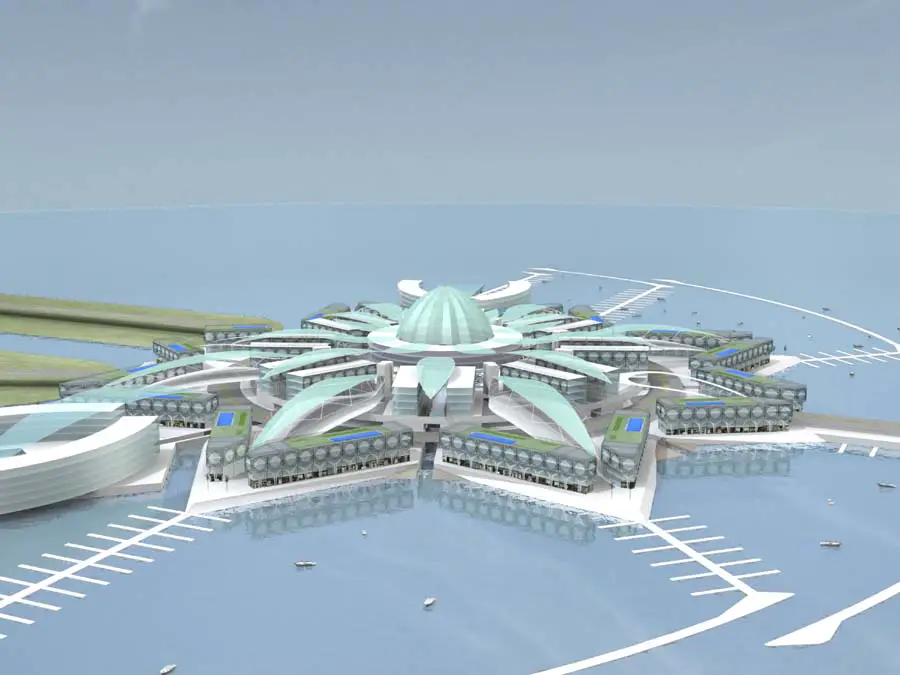
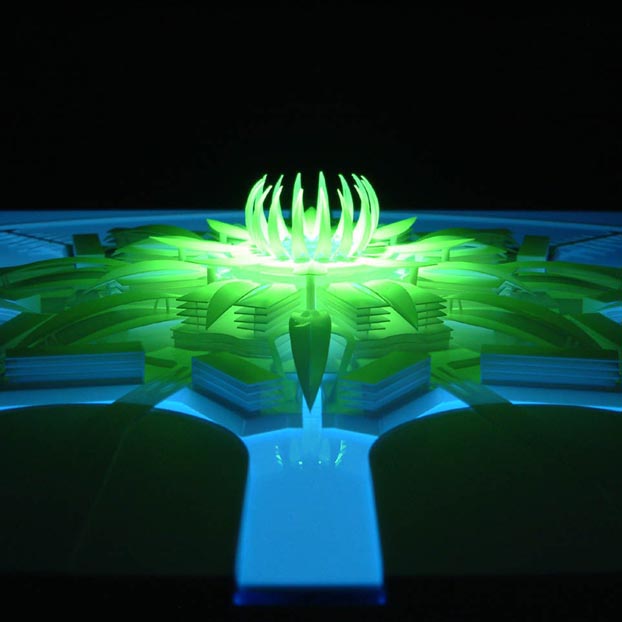
The design for the centrepiece of The Palm, Jebel Ali is inspired by the Nymphea or Water Lily and resembles the large flower sitting on a reflecting pool. This concept is used for the design of shading elements, which radiate from a central opening dome structure on the island. These provide shade from the desert sun during the day and opening up to allow the sea breeze to pass through the building at night. Below these shading components is a geometric layout of buildings derived from a simple Islamic decorative motif of rotated squares and which provides shade to the functional orthogonal architecture below.

The Dubai Palm Island centrepiece will also represent a major transport interchange for boat users coupled with an outstanding retail experience and will include several boatlifts, utilising RMJM’s previous experience on the award-winning Falkirk Wheel.

RMJM are designing the Village Centres on the island for the German-based international developers Innpro, who signed an agreement with The Dubai Palm developers in August 2002. These man-made UAE islands were conceived by His Highness General Sheikh Mohammed bin Rashid Al Maktoum, Crown Prince of Dubai and UAE Defence Minister.

Dubai Palm Islands comprise of approx. 100m cubic metres of rock and sand and will increase UAE's shoreline by a total of 120km.

The first Dubai Palm Island is set to be finished in 2006. Property on the islands went on sale in 2004. Residential island properties on The Palm, Jumeirah sold out in days.

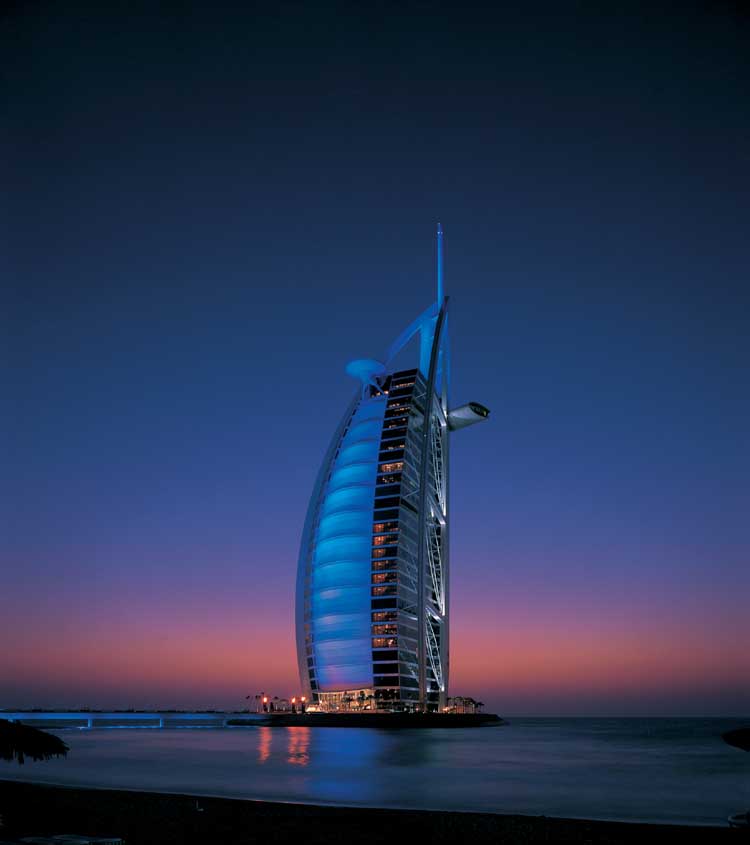
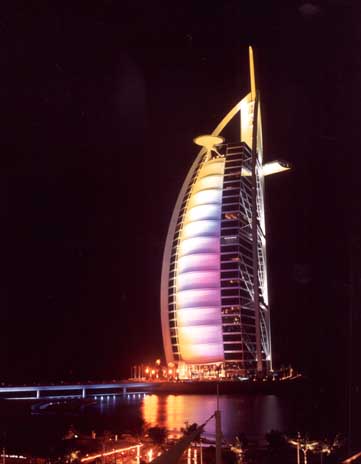
Burj al Arab, Dubai

Burj al Arab, Dubai

Date: 1999
Design: Atkins
Height: 321m

Star Rating: Titled 'seven-star hotel': 5 Star Deluxe
Hotel operator: Jumeirah

The Burj al Arab is the World's tallest hotel

Burj al Arab Burj al Arab Dubai Burj al Arab Hotel Burj al Arab Building
Burj al Arab images : Jumeirah

Jumeirah Beach Resort
- Burj al Arab
- Wild Wadi Aqua Park
- Jumeirah Beach Hotel

Jumeirah Beach Resort

In October 1993 Atkins began working on the Jumeirah Beach Resort project in Dubai. The scheme includes one of the world’s leading resort hotels, a landmark tower hotel (Burj al Arab) and a state of the art themed water park, all on one 65 acre site on the shores of the Arabian Gulf in Dubai.
The design is intrinsic to the success of the resort, it is different, stylish, unique and makes a strong statement about where Dubai is going and what it aims to be, modern and vibrant.
Atkins have offices in over 25 countries and are involved in projects in over 60 countries throughout the world. With International business accounting for 13 % of turnover at £54.4m, and 13% of operating profit at £3.1m.
The group has worked internationally for the past 30 years. Nearly half of our overseas business is in the Asian economies, and a quarter in the Middle East.
For the whole of the development, Atkins was the lead consultant providing, design, architecture, engineering and construction management. Atkins established a completely self-sufficient and fully resourced design and construction management office on the construction site, 140 strong at its peak.
The Jumeirah Beach Hotel, the first stage of the development, was opened in November 1997. Designed in the shape of a breaking wave, the hotel has won:-
Best International Hotel of the Year Award 1999
No. 1 International Leisure attraction of the Year Award 1999
Best New Business Hotel of the Year Award 1999
In its first year it had 80% occupancy, and now has near 100%
occupancy even through the ‘off peak’ season, previously unheard of in Dubai.

Burj al Arab Hotel Dubai Burj al Arab Atrium Burj al Arab UAE Burj al Arab Photo
Burj al Arab photos from Atkins

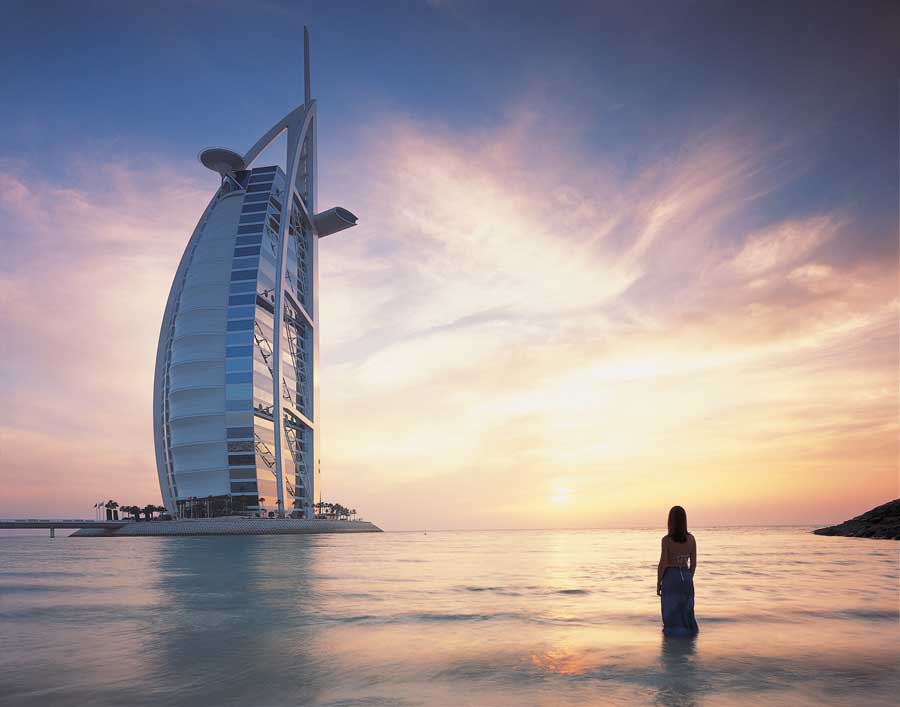
The crowning glory is the Burj al Arab (Arabian Tower) completed in October 1999 and officially opened on 1st December 1999. This extraordinary 321m tower is entirely unique in design, fulfiling the clients brief for a landmark building in Dubai. The Burj al Arab looks set to take its place amongst the likes of Sydney Opera House & the Eiffel Tower as symbols of their countries.
The Burj al Arab is the 15th tallest building in the world, and the tallest single structure hotel, standing 300m out to sea on a man made island, it has taken design and technology forward into the next millennium. Designed in the shape of a giant sail on a triangular plan the Burj al Arab Hotel is stunning in its simplicity and clarity. The Burj al Arab tower is already being covered in international media throughout the world, forming a backdrop for international events such as the powerboating World Championships.
The Wild Wadi Aquapark, on the same site, is a fully themed Arabic water park with some of the latest rides, slides and gismos in the entertainment industry. Opened in July 1999 is thrilling locals and visitors alike.
With these astounding results, even before the opening of the Burj al Arab we feel that through our design and technical expertise creating this resort has led it to achieve a place on the International Tourist and Business map.

Jumeirah Beach Resort was a phased development in three distinct parts:-

1) Jumeirah Beach Hotel

2) The Wild Wadi Aquapark

3) The Burj Al Arab

Burj al Arab Hotel

The Burj Al Arab is a super luxury 7 star All Suite hotel accommodating 202 No. 1, 2, 3 bedroom suites. Currently the tallest hotel in the world, 28 no. double storey floors, 321m high built on a man-made landscape island of the Jumeirah coastline. Full height atriums are enclosed by Teflon woven glass fibre curved walls. The Burj al Arab hotel offers 3 No. richly decorated restaurants, a 27th floor Skyview Restaurant and a 1st floor All Day Dining Restaurant and an Underwater Restaurant housing a high density of indigenous fish in 1150m³ in 3 No. Reef Aquariums accessible only via a submarine styled ride. With state of the art technology for guest interfaces, this hotel was designed to establish a world landmark and the ultimate in service.

Burj al Arab - The Arabian Tower
The Arabian Tower forms the main focus of the Jumeirah Beach Resort

Burj al Arab Structure + Design:
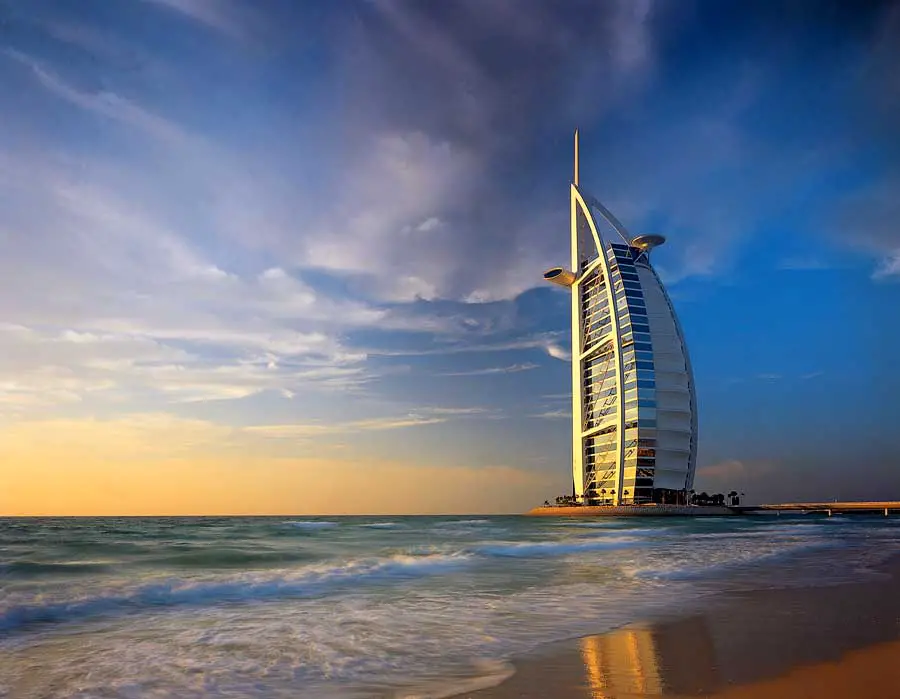
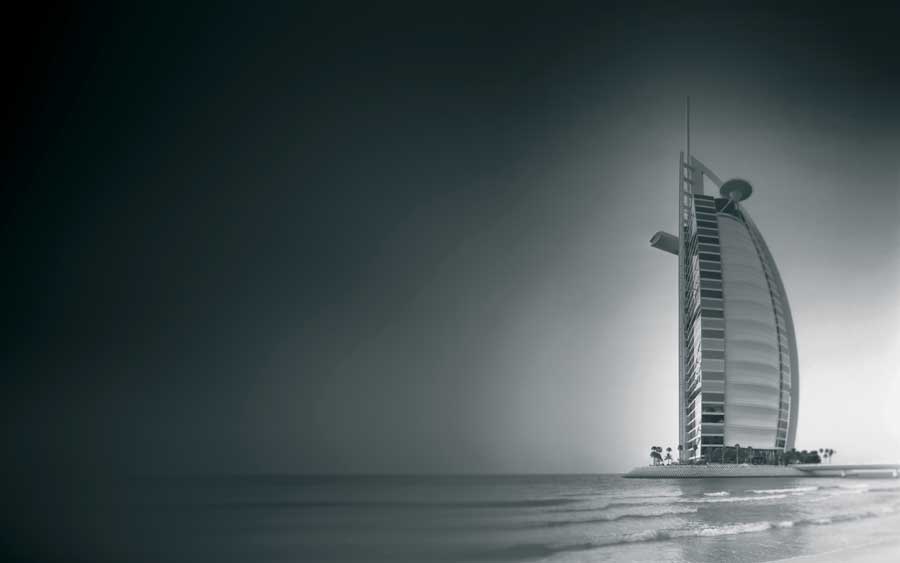
The Arabian Tower is a stunning Hotel built in the shape of a modern yacht sail to reflect Dubai’s seafaring heritage combined with a modern aspect moving forwards into the future. It is hoped that the unique shape of the Burj al Arab building will make it stand out amongst world structures and allow it to become an icon for the developing Dubai. The Burj al Arab design continues the nautical theme created by the Jumeirah Beach Hotel that is built in the form of a breaking wave.

Burj al Arab Dubai Burj al Arab Dubai Burj al Arab Dubai Burj al Arab Dubai
Burj al Arab pictures : Jumeirah

The Arabian Tower is 321 metres high and is the tallest stand-alone hotel structure in the world.
The Burj al Arab Tower is built 290 metres out to sea on a triangular, man made, landscaped island with sides of 150 m in length built off the sea bed in 7.5 metres of open sea.
The gross area of the Burj al Arab tower is 1.2 million square feet with 28 double height space floors, each floor is 7m high.
The Burj al Arab island itself is linked to the mainland by a slender, gently curving road bridge, the outer most tip of the island is almost 450 metres offshore.
The island is protected by special hollow concrete armour units. The units present a perforated sloping surface to the sea that absorbs the impact of the waves without throwing water onto the island.
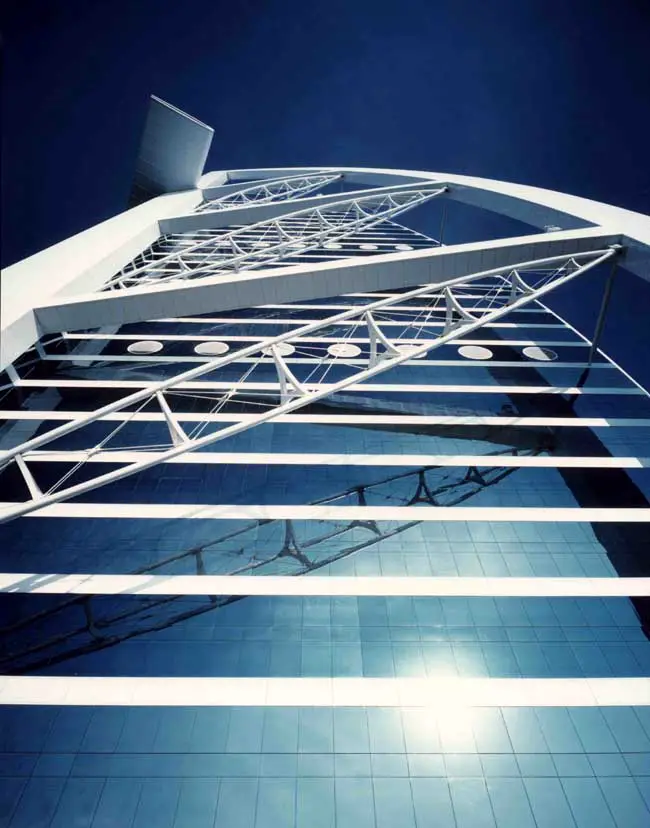
The mainly in-situ concrete structure of the Burj al Arab, with exposed diagonal steel wind bracing, is triangular in plan founded on 250 concrete piles which penetrate the sea floor to a depth of more than 40 metres.
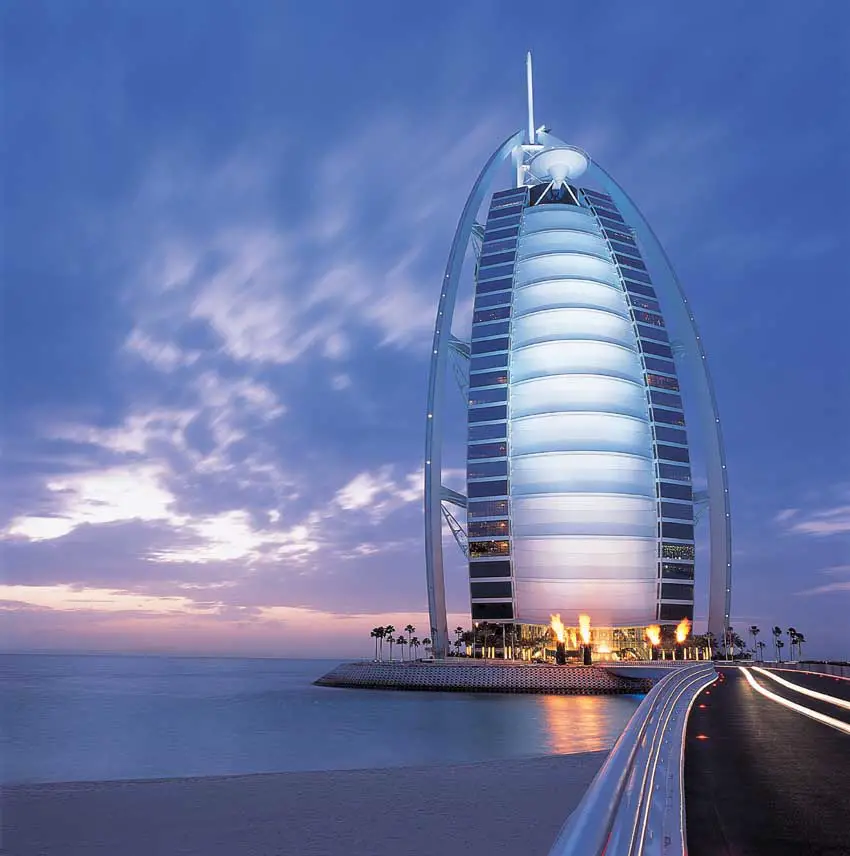
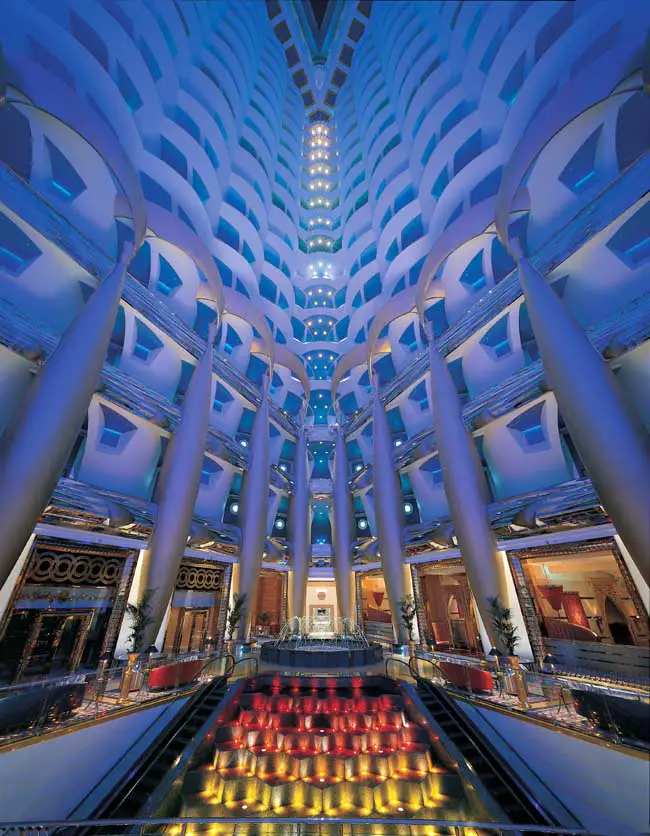
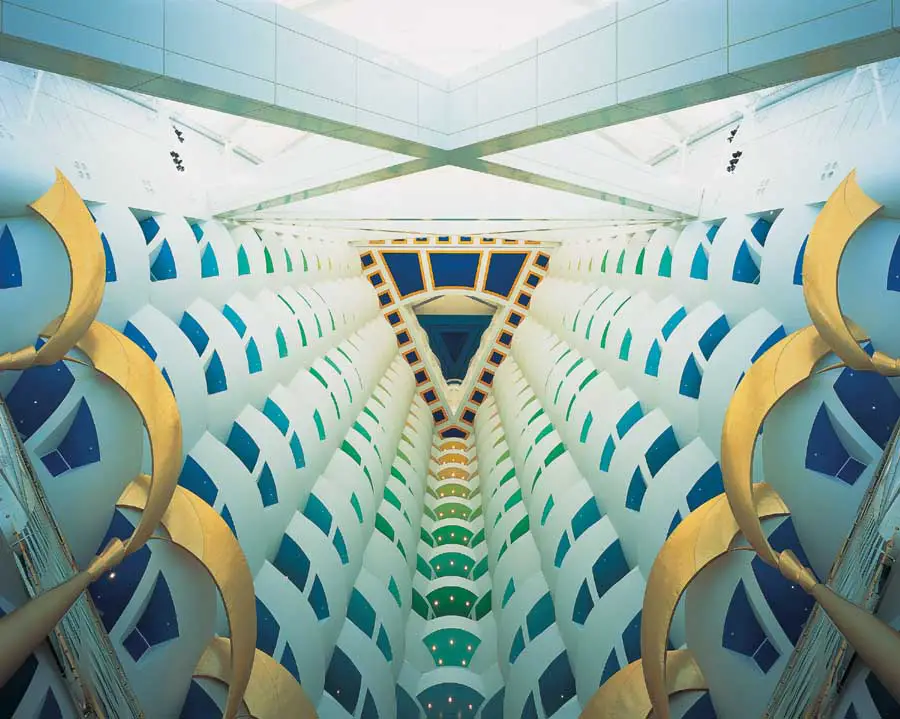
The Burj al Arab accommodation wings enclose two sides of a huge triangular atrium that runs up the full height of the accommodation floors. The third side, facing the shore, is enclosed by a double skinned, Teflon coated woven glass fibre screen; the first time such technology has been used vertically in this form or to this extent.
State of the art technology for guest interfaces and operational systems.
Communication facilities at the Burj al Arab range from digital telephone, inter-active TV, internet and video conferencing.
Fitted with some of the fastest lifts in the world, the Burj al Arab service lifts travel at a speed of 4 metres per second, whilst the panoramic lifts travel at a speed of 5 metres per second and the guest elevator at 7 metres per second.
Dicroyic lights illuminating the exterior of the Burj al Arab Tower in varying colours throughout the night.
Where the Burj al Arab bridge meets the island a animated display of water and fire greets the guest.

Burj al Arab Hotel Burj al Arab Hotel Dubai
Burj al Arab images from Atkins

Burj al Arab - Building Information

The Burj al Arab atrium is set to be the tallest atrium in the world at 182 metres high, soaring up the centre of the 'sail', with a sumptuous health suite on the 18th floor and grand ballroom on top.

Burj al Arab Rooms

202 duplex suites with a mixture of 1,2 and 3 bedrooms with floor areas of between 169m sq. (1 Bed) to 780m sq. (3 bed Grande).
142, 1 bed 18, 1 bed end suite 4, 1 bed deluxe 28, 2 bed 6, 3 bed 2, 3 bed special 2, 3 bed grand (whole top floor)

Burj al Arab Restaurants

- Al Mahara Seafood Undersea Restaurant
An undersea world experience incorporating more than 1000 cubic meters of sea water with large select specimens of rays, sand tiger sharks, or reef sharks, giant grouper, potatoe cod, jew fish and tropical species. Guests will be treated to a truly memorable and exciting experience as they approach this undersea restaurant

- Al Muntaha Skyview Restaurant - 27th Floor
The Burj al Arab skyview restaurant is situated 200 metres above the sea and cantilevers 25 metres from the main hotel structure. An elegant fine dining restaurant seating approximately 110 guests with dancing and a cocktail lounge affording magnificent panoramic views over Dubai and beyond.

- Al Iwan Seaview Restaurant - 1st Floor
A 24 hour luxury lobby lounge and restaurant with views of the Arabian Gulf

Burj al Arab Banqueting & Conference Centre

A fully equipped conference centre and banqueting facilities will be available for up to 200 guests.

Burj al Arab Health Club

State of the art equipment and luxurious facilities for relaxation and exercising will be installed in the Burj al Arab Health Suite. Separate facilities include swimming pools for ladies and men as well as mixed bathing. A separate gentleman's club includes Snooker and Billiard Tables.
Related Posts Plugin for WordPress, Blogger...